If you’re a restaurant trying to figure out the best loyalty software, you’ve probably already realized something pretty quickly: there are a lot of options, and they all sound pretty similar on the surface.
Between POS add-ons, standalone loyalty apps, enterprise platforms, and “all-in-one” systems, it can get confusing fast to understand what actually fits your restaurant.
We get it. Most operators don’t need more features, they need software that fits with their needs.
Whether you’re running a single location, growing across multiple sites, or managing a larger chain, we’ll help you narrow it down based on what your restaurant actually needs. In this guide, we’ll be breaking down the leading platforms in Canada, where each one works best, and where it might not be the right fit so you can make a confident decision.
What to Look for in Restaurant Loyalty Software
Before you start comparing platforms, it helps to get clear on what actually matters in your restaurant environment. A quick service kiosk would need a different setup than a dine-in restaurant that might need to focus more on table service, guest experience, and longer visit interactions.
A lot of loyalty tools look similar in demos, but they perform very differently once they’re live during a busy dinner rush.The goal is to find the one that fits how your staff works, how your customers behave, and how your restaurant grows.
Here’s what actually matters when evaluating loyalty software in Canada:
1. POS Integration That Actually Works in Real Time
A loyalty program is only as good as its connection to your POS.
It’s not enough for a platform to “integrate”, you want to understand how deeply it syncs:
- Does it capture transactions automatically or require manual steps?
- Is customer data updated in real time?
- Does it support refunds, modifiers, and split bills correctly?
Weak integrations create friction for staff and inconsistent customer data, which directly reduces loyalty program performance.
2. No Friction at Checkout
In a restaurant, the best loyalty program is the one that doesn’t slow anything down—for staff or guests. That means combining three things into one smooth experience: quick enrollment, instant access, and fast recognition at the POS.
Look for systems that have:
- Phone number or email entry at checkout with minimal steps
- QR code sign-up on receipts, tables, or counter displays
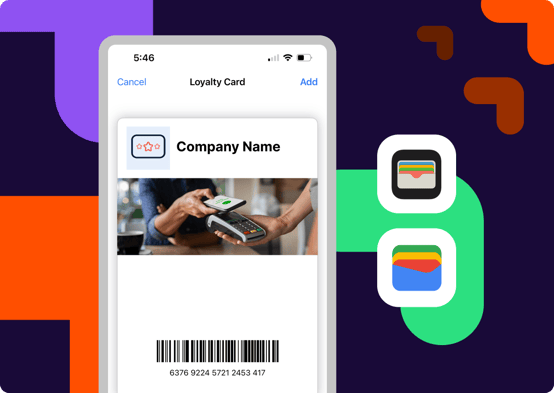
- Optional mobile wallet integration (Apple Wallet / Google Wallet) so customers can instantly store their loyalty pass without downloading an app
The wallet piece is especially important because it removes the “I don’t have the app” or “what’s my phone number again?” moment entirely. Customers can simply pull up a scannable pass from their lock screen (just like a boarding pass or payment card).
On the staff side, the process should be just as fast:
- One scan or lookup to enrol or identify a customer
- No switching between systems or slowing down the POS flow
- Instant reward recognition without extra steps during checkout
3. Reporting That Helps You Make Decisions
Loyalty programs generate a lot of data but not all reporting is useful in a restaurant setting.
The difference between “having reports” and “having actionable insights” is whether you can quickly answer real operational questions like:
- Are customers actually coming back more often?
- Which locations are driving the highest repeat visit rate?
- Which promotions increased traffic versus just discounting sales?
- What does a “loyal customer” actually look like in your business?
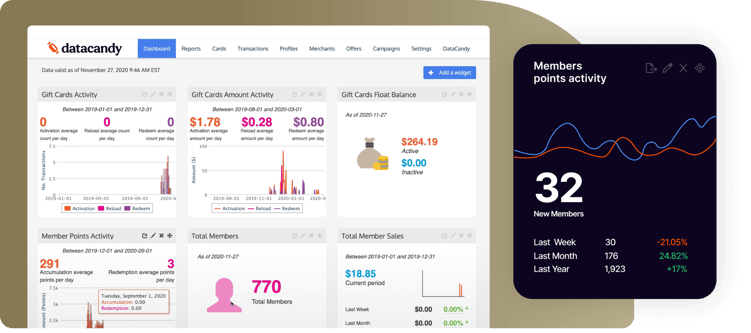
Good loyalty software should translate raw transaction data into clear business outcomes.
Look for reporting that:
- Clearly shows repeat visit frequency and customer retention trends
- Breaks performance down by location, campaign, or time period
- Highlights high-value customer segments (not just total members enrolled)
- Connects loyalty activity directly to revenue impact
- Makes it easier to identify patterns and customer behaviour trends over time through tools like restaurant loyalty reporting and customer insights
If you can’t quickly understand whether your program is working, it becomes hard to optimize or justify internally.
4. Canadian-Specific Needs
For Canadian restaurant operators, local context matters more than most vendors initially highlight.
Many loyalty platforms are built primarily for US or global markets, which means they often miss key operational requirements that come up in Canadian hospitality businesses.
Look for platforms that support:
- Bilingual experiences (English + French) for both customer-facing tools and support
- Canadian POS integrations that actually reflect systems used in local restaurants (not just major US platforms)
- Local onboarding and support teams that operate in your time zone and understand Canadian restaurant workflows
- Data handling and compliance standards aligned with Canadian payment and privacy expectations
Support quality also matters more than it might seem at the evaluation stage. When something goes wrong during service hours, having a local team that understands your setup can make a meaningful difference in downtime and resolution speed.
For many Canadian restaurant groups, these behind-the-scenes differences end up being just as important as features when choosing a long-term platform.
Top Restaurant Loyalty Platforms Compared
|
Platform |
Best for |
Strengths |
Limitations |
|
Square Loyalty |
Small, independent restaurants already using Square POS |
|
|
|
TouchBistro |
Full-service restaurants |
|
|
|
DataCandy |
Mid-market, growing restaurants |
|
|
|
Punchh |
Large enterprise chains |
|
|
|
Paytronix |
Enterprise and multi-location |
|
|
|
TapMango |
SMB restaurants focused on customer engagement and promotions |
|
|
For the most up-to-date information, we recommend checking each provider’s official website, as features, integrations, and pricing are subject to change over time.
Best for Independent Restaurants (1–3 Locations): Square Loyalty and TouchBistro
For smaller restaurants, simplicity usually matters more than advanced customization.
At this stage, operators typically want a loyalty program that:
- Is easy for staff to learn quickly
- Doesn’t slow down service
- Encourages repeat visits without adding operational complexity
- Works naturally with the POS they already use
That’s why platforms like Square Loyalty and TouchBistro are often strong starting points.
Square Loyalty
Square Loyalty is one of the easiest ways for smaller restaurants already using Square POS to launch a loyalty program quickly.
Because it’s built directly into the Square ecosystem, onboarding tends to be straightforward:
- Customer enrollment happens easily during checkout
- Staff training is minimal
- Rewards are simple for customers to understand
- Restaurants can get started relatively quickly without major operational changes
For cafés, quick-service restaurants, and independent operators launching loyalty for the first time, that simplicity is often exactly what’s needed.
The tradeoff is that the platform is intentionally streamlined.
As restaurants grow, operators may eventually want:
- More advanced reporting and customer insights
- Greater personalization capabilities
- More flexibility across multiple locations or systems
- More integrated gift card and customer engagement tools
For restaurants staying relatively small and fully within the Square ecosystem, it remains a very practical option.
TouchBistro
TouchBistro is often a better fit for full-service restaurants that want loyalty connected more deeply into front-of-house and back-of-house operations.
Its biggest strength is operational integration. Restaurants using the TouchBistro ecosystem can manage ordering, menu management, and loyalty within a more unified setup, which can simplify workflows for dine-in environments.
The platform is especially helpful for operators that need:
- Detailed menu management
- More traditional full-service restaurant workflows
- A tighter connection between POS and guest experience
For service-heavy restaurants, this operational consistency can be valuable.
At the same time, TouchBistro tends to be more operationally focused than customer engagement-focused. Restaurants looking for deeper marketing automation, broader loyalty customization, or more advanced customer segmentation may eventually want additional flexibility as they scale.
Best for Growing Canadian Restaurant Groups (4–20 Locations): DataCandy
As restaurants expand across multiple locations, loyalty software becomes less about simply rewarding visits and more about building long-term customer retention systems that are operationally manageable.
This is where DataCandy tends to differentiate itself particularly well.
Many growing restaurant groups reach a point where SMB loyalty tools start to feel limiting, but enterprise platforms feel unnecessarily complex. DataCandy sits in a middle ground that often fits Canadian hospitality businesses well.
That said, DataCandy supports gift card and loyalty programs for businesses ranging from single-location restaurants to large multi-location brands with hundreds of locations, including well-known groups such as Mr. Puffs, Edo Japan, and multiple MTY Group brands.
Why DataCandy Fits Growing Restaurant Groups
As restaurants expand beyond one or two locations, operators usually need more than basic points tracking.
They need:
- Better customer visibility across locations
- More advanced reporting
- Personalized marketing automation
- Stronger retention strategies
- Systems that can scale without becoming overly complicated
This is where DataCandy tends to stand out.
One of the biggest differentiators is the ability to combine gift cards and loyalty into one connected ecosystem rather than treating them as separate tools. That creates a more complete view of customer behaviour while simplifying operations internally.
The platform also leans heavily into Canadian restaurant needs, including:
- Canadian POS integrations
- Bilingual customer experiences
- Local onboarding and support
- Hospitality-focused workflows
From a marketing perspective, DataCandy offers more flexibility than many SMB-focused platforms:
- Personalized rewards and automated offers
- Mobile wallet integration for quick customer access
- Reporting focused on repeat visit behaviour and customer retention trends
Importantly, it does this without becoming as operationally heavy as many enterprise platforms.
Best for Enterprise Chains (50+ Locations): Punchh, Paytronix, and DataCandy Pro
At the enterprise level, loyalty programs become significantly more complex.
Large restaurant chains often need:
- Advanced customer segmentation
- Franchise-level controls
- Deep API infrastructure
- Subscription or membership models
- Sophisticated reporting across regions and locations
- Personalized campaigns at scale
That’s where enterprise-focused platforms like Punchh, Paytronix, and DataCandy come into the conversation.
Punchh
Punchh is designed for enterprise restaurant brands that need highly customized loyalty infrastructure across large networks of locations.
Its strengths are scale and complexity:
- Enterprise-grade personalization
- Advanced loyalty mechanics
- Subscription and recurring revenue models
- Multi-location operational scalability
For large chains with dedicated marketing and IT teams, these capabilities can be extremely powerful.
However, that complexity comes with tradeoffs:
- Setup and implementation can be lengthy
- Costs are significantly higher than SMB or mid-market platforms
- Reporting and dashboards can feel overwhelming for smaller operational teams
For enterprise organizations, those tradeoffs are often expected. For smaller restaurant groups, the system can feel heavier than necessary.
Paytronix
Paytronix is another major enterprise hospitality platform focused heavily on omnichannel loyalty and customer engagement.
The platform is known for:
- Strong enterprise analytics
- Advanced segmentation and automation
- Broad hospitality integrations
- Mobile ordering and membership capabilities
For large brands operating sophisticated customer engagement ecosystems, Paytronix offers substantial flexibility.
At the same time, the platform can feel resource-intensive operationally. Reporting environments and workflows are often designed with enterprise marketing teams in mind, which may feel heavier than necessary for mid-market operators.
DataCandy Pro
DataCandy Pro is DataCandy’s enterprise-level loyalty platform designed for high-volume businesses, franchises, and multi-location brands that need more advanced functionality than standard SMB loyalty tools.
What makes DataCandy Pro different is that it combines enterprise loyalty capabilities with a stronger focus on operational usability and Canadian market support.
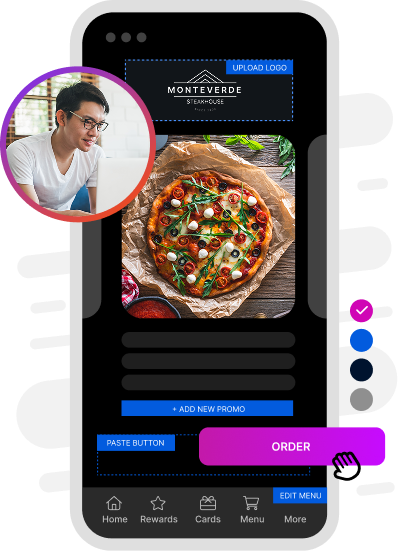
DataCandy Pro includes everything in DataCandy’s standard platform, along with additional enterprise-level features such as:
-
Advanced customer segmentation and targeting
-
Multi-location reporting and centralized customer insights
-
SKU-based rewards and product-level promotions
-
Membership tiers, bonus campaigns, and gamification features
For restaurant groups operating across multiple locations, franchises, or regional chains, DataCandy Pro offers enterprise-level functionality without some of the complexity traditionally associated with larger global platforms.
It can be particularly appealing for Canadian restaurant brands that want:
- Bilingual support
- Canadian POS integrations
- Local onboarding and support
- A combined gift card, loyalty, and marketing ecosystem
The honest distinction is that while Punchh and Paytronix are often optimized for massive global enterprise organizations, DataCandy Pro tends to fit best for regional chains, franchise groups, and growing enterprise brands that still want a more hands-on and operationally practical experience.
The Canadian Difference: Bilingual Support, Canadian POS Integrations, Local Support
For Canadian restaurant operators, choosing loyalty software isn’t just about features — it’s about finding a platform that actually fits the way Canadian hospitality businesses operate.
This is one area where many US-first platforms can fall short.
Bilingual Customer Experiences Matter
For restaurants operating in Quebec or bilingual markets, English-only loyalty experiences create friction quickly.
Look for platforms that support:
- Bilingual customer-facing enrollment flows
- French and English email/SMS campaigns
- French reward and offer experiences
- Bilingual customer support and onboarding
As your loyalty program grows, these operational details become increasingly important for consistency across locations and customer touchpoints.
Canadian POS Integrations Are Different
Not every restaurant in Canada runs on the same POS systems commonly used in the US market.
Many Canadian operators rely on regionally popular systems or hospitality-specific setups that global loyalty vendors don’t always prioritize.
That’s why integration depth matters, especially for:
- Real-time transaction syncing
- Multi-location customer tracking
- Gift card redemption
- Reporting accuracy
Platforms with stronger Canadian POS integration experience often create smoother onboarding and fewer operational workarounds long term.
Local Onboarding and Support Make a Real Difference
Support quality becomes much more important once your loyalty program is live.
When issues happen during service hours, restaurants need fast responses from teams that understand hospitality operations—not generic support ticket queues across different time zones.
Canadian-based support teams often provide:
- Faster onboarding assistance
- More localized implementation support
- Better understanding of Canadian restaurant workflows
- Easier communication for bilingual teams
These operational differences may seem small during vendor evaluation, but they often become major differentiators once programs scale across multiple locations.
Gift Cards + Loyalty: Why the Bundle Matters for Canadian Restaurants
Many restaurants treat gift cards and loyalty as separate programs, but in reality, they work best when they’re connected.
The strongest restaurant loyalty strategies create a full customer lifecycle:
- A customer buys a gift card
- The recipient visits the restaurant
- Loyalty enrollment happens naturally during redemption
- Personalized offers help drive repeat visits afterward
When gift cards and loyalty operate together inside one platform, restaurants gain a much clearer view of customer behaviour and long-term value.
Operationally, bundled systems also make things significantly easier to manage.
Using separate systems for gift cards and loyalty often creates:
- Disconnected customer data
- More complexity for staff during service
- Reporting gaps between systems
- Inconsistent customer experiences across locations
When everything is centralized into one platform, restaurants can manage customer profiles, rewards tracking, gift card balances, purchase history and marketing campaigns all in one place. For multi-location restaurants especially, this creates cleaner reporting, smoother operations, and a more seamless guest experience overall.
As restaurant groups grow, this becomes even more important. Managing disconnected systems across multiple locations quickly becomes difficult operationally, which is why many growing restaurant brands eventually move toward more unified gift card and loyalty ecosystems.
FAQs
How much does restaurant loyalty software cost?
Restaurant loyalty software pricing can vary significantly depending on the size of your restaurant, the number of locations, and the features included.
Generally:
- SMB platforms tend to offer lower monthly pricing with more basic loyalty functionality
- Mid-market platforms include more advanced automation, reporting, and multi-location support
- Enterprise systems typically use custom pricing models with onboarding and implementation fees
For DataCandy specifically, pricing starts at:
- $125/month per location
- One-time $500 implementation fee
- Gift cards are included within the platform setup
This gives restaurants access to both loyalty and gift card functionality in one system rather than paying for separate platforms.
Restaurants should also evaluate:
- SMS or email marketing fees
- Integration costs
- Multi-location pricing structures
- Ongoing support and onboarding
The cheapest monthly plan isn’t always the most cost-effective option long term if it lacks automation, reporting, or scalability.
What POS systems does loyalty software work with?
Most restaurant loyalty platforms integrate with major POS systems, but the depth of those integrations varies widely.
Before choosing a platform, restaurants should confirm:
- Real-time transaction syncing
- Multi-location support
- Gift card compatibility
- Reporting accuracy
- Mobile wallet or app compatibility
Some loyalty systems are tied directly to a single POS ecosystem (like Square), while others support integrations across a broader range of restaurant technology providers.
DataCandy integrates with a wide range of POS systems, payment providers, online ordering tools, and restaurant technology partners, including platforms like Maitre’D, MYR, UEAT, Moneris, Deliverect, and more.
You can view the full integration list here.
Is there a free trial?
Some loyalty platforms offer:
- Free trials
- Demo environments
- Pilot programs for select locations
However, many mid-market and enterprise restaurant loyalty platforms focus more on personalized demos and onboarding consultations rather than self-serve free trials.
For DataCandy, restaurants can book a demo to explore:
- Loyalty and gift card workflows
- POS integrations
- Mobile wallet functionality
- Automated offers and customer engagement tools
Final Thoughts
Choosing the right loyalty program software really comes down to finding a platform that matches your specific needs as a Canadian restaurant.
There’s no single “best” option for everyone. Smaller restaurants often benefit from simplicity and ease of use, while growing multi-location groups need stronger reporting, automation, and tools that can scale without adding unnecessary complexity. Enterprise brands, on the other hand, may prioritize deeper customization and infrastructure-heavy systems.
The most important step is taking a closer look at how each platform actually fits into your day-to-day operations. The best way to do that is to book a demo and see the workflows in action.
DataCandy is one option built with flexibility in mind, offering features that can adapt to different restaurant sizes and growth stages.
Book a demo today to explore how flexible loyalty solutions can fit into your current workflow.