A rewards points program sounds simple: customers earn points, redeem points, and the loop continues. And in practice, it is. But that simplicity is also what makes it such a strong foundation to build on. Underneath a straightforward earn-and-redeem structure is a layer of customer behaviour data, automated communications, and personalized offers that can turn a basic loyalty program into one of the most effective growth tools a business has.
This guide breaks down how points programs work, from the customer experience to what's running in the background.
What Is a Rewards Points Program?
A rewards points program is a structured loyalty system where customers earn points every time they make a purchase, and can redeem those points for rewards once they've accumulated enough. The mechanics vary by business, but the core loop is the same: buy, earn, redeem, repeat.
The points themselves are just a unit of currency your business defines. One point might equal one cent. Or a customer might earn one point per dollar spent, with 500 points unlocking a $10 reward. The specific numbers matter less than the structure and the structure matters because it shapes how often customers come back and how much they spend when they do.
Points programs sit within the broader category of loyalty programs, alongside punch cards, tiered membership systems, and cashback schemes. What makes points programs particularly effective for most businesses is their simplicity and flexibility. You can attach points to specific behaviours (first visit, birthday, referral), not just spending.
How Do Points Programs Work in Practice?
The customer experience is usually straightforward. A customer signs up via a QR code, a website, or through a digital app and gets enrolled in the program. From there, every qualifying transaction earns them points automatically.
This is what usually happens behind the scenes:
- Points are tracked at the customer level: Each member has a profile that accumulates points across transactions. In a multi-location setup, a good platform consolidates this into a single view so a customer who earns points at your downtown location can redeem them at your suburban one too.
- Rewards are unlocked when points thresholds are met: This might be a discount, a free item, a store credit, or something else entirely. Some programs notify customers automatically when they're close to a reward, which is one of the most effective ways to drive an extra visit.
- Data is captured with every transaction: Every time a member makes a purchase, you're tracking data: how often they visit, what they buy, when they're most likely to come back. Over time, that becomes the foundation for smarter marketing: targeted offers, win-back campaigns for lapsed customers, and promotions timed to actual behaviour.
If you've noticed that PC Optimum can now tailor their weekly flyers to you, it's because they know what you like, and your loyalty program data is what told them. You can capture data from your customers to provide them with personalized communications too.
Why Points Programs Work
Customers who are enrolled in a loyalty program behave differently than those who aren't, there’s a psychological explanation behind it. The act of accumulating points creates a sense of progress and investment in the relationship.
The numbers reflect this:
- Loyalty members spend 66% more than non-members on average
- 79% of customers say they're more likely to buy from brands that offer a digital loyalty program
That's not because points programs manufacture loyalty from nothing, it's because they give customers a reason to choose you consistently instead of splitting their business across several options.
There's also a compounding effect over time. A customer who joins your program and redeems a reward is significantly more likely to come back than one who never had a reason to return. And customers who feel recognized are far more likely to tell someone about your business. In fact, 86% of loyal customers recommend the brands they're loyal to.
The Different Ways to Earn Points
Like we’ve mentioned in the introduction, a rewards points program is favoured for its simplicity and flexibility. Beyond the simplest “points per dollar spent” earning model, variation in points-based offerings can also look like:
- SKU-based loyalty: This links points to specific products rather than total spend. A retailer might offer double points on a slow-moving product to clear inventory or a specific product category, or a café might attach bonus points to a new menu item to drive trial. This kind of precision requires a platform that can connect your loyalty program to your product catalogue but the flexibility it unlocks is significant.
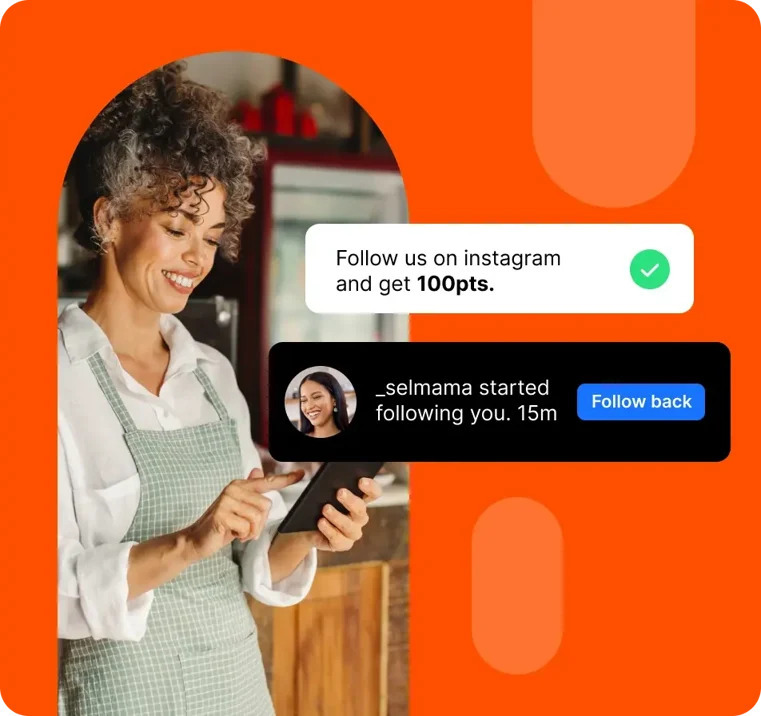
- Behaviour-based bonuses: Rewarding actions beyond spending e.g. by signing up, referring a friend, writing a review, following on social media, or making a purchase during a specific time window. These are the levers you pull when you want to grow your member base or drive traffic during slow periods.
- Tiered earning: A customer who crosses a spending threshold might earn 1.5x or 2x points on future purchases, giving high-value customers a reason to stay rather than drift toward a competitor.
What Customers Can Redeem Points For
Reward redemption options shape how customers perceive the value of your program and it’s important to set a redemption threshold that feels attainable to your target customers.
These are some common reward redemption options:
- Discounts or store credit: Straightforward, universally understood, and easy to automate. The customer sees their balance, decides whether to redeem, and the discount is applied instantly. Every 10,000 PC Optimum points earned can be redeemed for $10 off your purchase.
- Free products: A list of items that could be redeemed for a number of points like a free brewed coffee for 50 points, or a croissant for 100 points. Domino's Pizza points lets you collect points and redeem them for things like free sauce, drinks, or even a free pizza if you save them up before cashing in.
- Exclusive access or experiences: For some businesses, the most compelling rewards aren't discounts at all—they're early access to new products, invitations to events, or members-only perks. These work especially well for building the kind of emotional loyalty that's hard for competitors to replicate.
The redemption threshold you set matters more than most operators realize. Too high, and customers disengage before they ever see a reward. Too low, and the economics don't work. Ultimately, you want your customers to redeem their rewards. If your customers aren’t redeeming their rewards, that might be a sign of lost engagement.
Bonus Tip: If your data suggests that customers aren’t redeeming their rewards, consider running a bonus redemption event. These are limited-time opportunities that give loyalty members the ability to get more value out of their points. Redeeming a $50 gift card with 5000 points instead of the usual 8000 points? *Immediately adds to cart*
How DataCandy Handles Points Programs
DataCandy's loyalty platform is built for exactly this kind of program. Whether you're running a single location or a multi-site operation that needs customer data consolidated across every touchpoint.
Points are tracked digitally, members can access their balance through Apple Wallet or Google Wallet, and the platform supports SKU-based loyalty for businesses that want to tie rewards to specific products. Automated offers go out based on customer behaviour, not a one-size-fits-all blast, which means the right message reaches the right customer at the right time.
If you want to understand how a points program might perform for your specific setup, we actually have an ROI calculator to guide you as a practical starting point.
Getting Started
A rewards points program doesn't need to be complicated to work. The businesses that run the most effective programs tend to start simple with a clear earn rate, a meaningful reward, and a straightforward enrolment flow. And from then on, you can build from there once you understand how their customers are actually behaving.
The goal isn't a program with every feature enabled. It's a program your customers understand, your staff can explain in one sentence, and that gives you the data to make smarter decisions about how to grow.
DataCandy makes it easy to launch, manage, and grow a loyalty program that works for your customers and your bottom line.
FAQs
How many points should I give per dollar spent?
There's no universal right answer, but a common starting point for restaurants and retail is one point per dollar spent, with a reward unlocking at 100–200 points. The goal is a threshold that a regular customer hits within a few visits. Close enough to feel achievable, not so low that it erodes your margins.
Do customers actually use points programs?
Yes. And enrolment has been growing. The bigger challenge for most businesses is keeping the program visible enough that members remember to use it.
What's the difference between a points program and a punch card?
A punch card rewards a specific number of visits with a free item. A digital points program tracks members individually, captures purchase behaviour, and lets you send automated communications based on what customers actually do. Both offer a simple way to reward customers for their visits but a digital points program offers greater promotional opportunities such as SKU-based promotions, behaviour-based offers, and bonus points redemption events.
Can I run a points program across multiple locations?
Yes, and for multi-location operators it's one of the strongest arguments for going digital. A good platform consolidates customer profiles across all your locations so a member can earn at one site and redeem at another without any friction.
What happens to points customers never redeem?
Unredeemed points are sometimes called "breakage" in the industry and while they reduce your liability on paper, high breakage rates usually signal a program that isn't engaging customers effectively. If members aren't redeeming, it often means the reward threshold is too high, the communications aren't prompting action, or the reward itself isn't compelling enough. It's worth treating breakage as a diagnostic rather than a financial cushion.
How long does it take to set up a points program?
With the right platform, less time than most operators expect. DataCandy's setup typically takes under ten days, including POS integration. The longer part of the process is usually deciding on your program structure (i.e. earn rate, redemption threshold, reward types) before anything gets built.