Most promotions ask customers to pay attention to your business:
“Hey, we’re having an end of season sale—check us out.”
But a birthday reward works the other way around:
“Hey, it’s your special day and we want to celebrate it with you.”
It signals that your business has been paying attention to them. That shift in dynamic is small on the surface and significant in practice—it feels genuinely personal. It's also why birthday rewards punch above their weight, consistently ranking among the highest-converting offers in loyalty marketing.
This guide covers how birthday rewards work, what to offer, how to structure the redemption window, and what to think about before you launch one.
What Are Birthday Rewards
Birthday rewards are a loyalty feature that automatically delivers a reward to enrolled members during their birthday month or on their birthday. The reward is typically a free item, discount, bonus points, or store credit, and it's triggered by the birth date collected when the customer signed up.
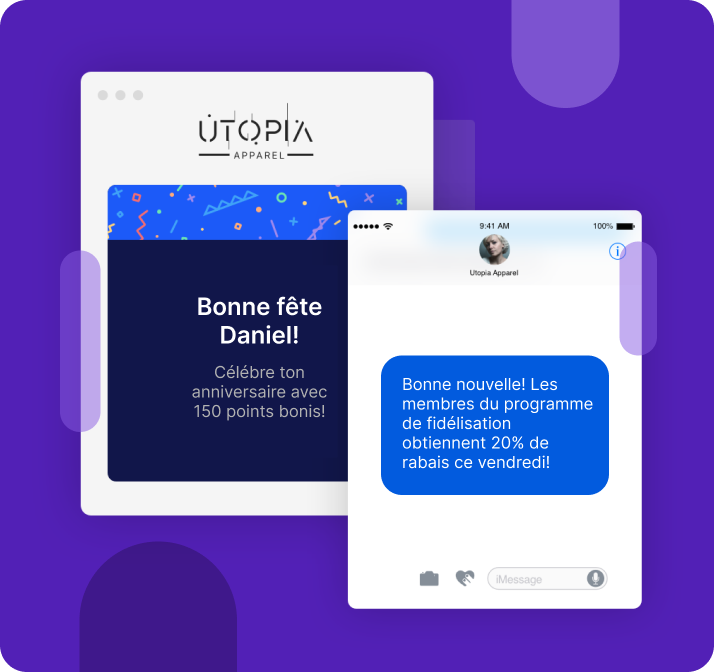
The mechanics are straightforward. A customer joins your loyalty program and provides their date of birth during enrolment. Your platform stores that information, and when the customer's birthday month arrives, the reward is sent automatically, usually by email or SMS. The customer redeems it on their next visit.
Why Birthday Rewards Outperform Generic Promotions
The psychology behind birthday rewards draws on the same principles as other free gift promotions (reciprocity, element of surprise, emotional loyalty) but the timing amplifies all three.
A birthday is one of the few moments when a customer is already likely to treat themselves. The reward arrives in that context and reinforces it. When a business shows up with something personal at exactly the right moment, it signals something a Tuesday discount never could: that they noticed, and that they remembered.
It also impacts visit frequency. A customer who receives a birthday reward has a concrete reason to visit during that period, even if they weren't otherwise planning to. Birthday reward campaigns also create an opportunity to collect data on customer behaviour, including redemption rates and purchase patterns, that can inform future marketing efforts.
What to Offer as a Birthday Reward
The reward itself matters. A birthday offer that feels meaningful generates genuine goodwill; one that feels token erodes it.
- Free item: The most common and often the most effective. A free dessert, a complimentary side, or a mini-sized free gift. The key is that it feels like a gift rather than a transaction. Something the customer wouldn't normally buy for themselves, or wouldn't think to ask for, tends to land better than a straight discount. Who knows, maybe it’s something they’ve never tried and eventually return to purchase regularly in the future.
- Bonus points: Double or triple points on all purchases during the birthday month. This works well for customers who are already engaged with the program and motivated by their points balance. It also drives incremental spend rather than just a single visit.
- Complimentary experience: The reward could be an intangible experience. A fitness studio/gym could offer a free personal training session, a free wine tasting experience at a wine shop, or a complimentary head and shoulder massage at a spa. These build a stronger emotional connection than a discount, and they're harder for competitors to replicate.
The right choice depends on your margins, your product mix, and what your customers actually value.
How Long Should the Reward Window Last
There are many ways to set up a birthday reward redemption window, with the simplest usually being a redemption period during the customer's birthday month.
That’s because:
- A one-day window is too narrow: A customer whose birthday falls on a Wednesday may not be able to visit until the weekend. If the reward has already expired, the goodwill evaporates along with it. A week, two-week, or even month-long window gives customers time to plan a visit and actually redeem the offer.
- Birthday month rewards are easier to operationalize: Your team knows that members with birthdays in June will receive their offer in June, which simplifies tracking and makes it easier to anticipate any associated promotional volume.
That said, restricting the reward redemption to the day itself isn’t inherently wrong either. To some businesses (e.g. Denny’s, Krispy Kreme, and Marble Slab Creamery), it’s more of a strategic play. A single-day window creates a sense of occasion and exclusivity that a month-long offer can't replicate.
Starbucks also operated its birthday rewards with a one-day redemption window. But under its current tiered program, it now offers a lot more flexibility:
- Green members can redeem their birthday reward on their actual birthday only
- Gold members get a 7-day window
- Reserve members get a full 30 days
The tighter window at the base tier creates a sense of occasion, while the extended window becomes a tangible perk worth earning toward. For a brand with Starbucks' app engagement and daily visit habits, it works. For most businesses without a tiered program, the drop-off in redemption from customers who simply couldn't make it that day outweighs the urgency benefit.
Bottom line is, the right approach depends on your visit frequency and how your customers tend to engage with offers.
.jpg?width=589&height=392&name=group-friends-with-cake-surprise-birthday-party%20(1).jpg)
How to Set Up a Birthday Rewards Program
Now that we’ve discussed the considerations needed when setting up birthday rewards, the actual setup process is simpler than most businesses expect. And the ongoing maintenance is minimal once it's running.
- Collect birthday information at enrolment: This is the prerequisite everything else depends on. The birthday field should be part of your loyalty program sign-up flow, whether that's at the point of sale (POS), via a QR code, or through a digital app.
- Define the reward and the window: Decide what the reward is, when it activates (birthday month, week, or day), and how long the customer has to redeem it. Document this clearly so your team can answer questions confidently at the counter.
- Set up the automated trigger: With a platform like DataCandy, the birthday offer is set up once and then runs automatically (it’s what we call Lights Out promotions). When a member's birthday month arrives, the offer is delivered by email or SMS without any manual intervention from your team. Plus, you can set birthday reward reminders to notify the member to use their reward or get their bonus points before the offer expires. This is the part that makes birthday rewards sustainable at scale.
- Review your reward redemption rates: A strong birthday program typically sees higher redemption rates than standard promotional offers. Low redemption might occur if: a reward doesn't feel valuable enough, birthday communications aren’t being opened, or a redemption window that's too narrow. On the flip side, very high reward redemptions are worth a closer look too.
Final Thoughts
Birthday rewards work best as one component of a broader loyalty strategy, not a standalone feature. On its own, it drives one visit per year per member. When paired with a points program, milestone rewards, and winback campaigns, it becomes part of a system that keeps customers engaged throughout the year.
When executed well with a valuable birthday perk and timely communications through emails and SMS, a birthday program is often the moment a customer realizes your program is actually paying attention to them. And that realization is what makes them open the next offer, redeem the next reward, and keep choosing you when they have other options.
Build a loyalty program that keeps your customers coming back all year round.