Loyalty programs have become a standard part of doing business, with around 90% of consumer-facing companies now offering some form of customer loyalty program. From your local coffee shop to full-service restaurants, chances are you've joined at least one yourself.
But what exactly is a loyalty program? How does it work, and why has it become such an important tool for restaurants of all shapes and sizes? In this guide, we'll answer those questions and explain everything restaurant owners need to know about loyalty programs.
What Is a Loyalty Program?
A loyalty program is a structured system that encourages customers to return by offering rewards for repeat business. Instead of treating every purchase as a one-time transaction, a loyalty program gives customers an incentive to continue choosing the same business over competitors.
Rewards can take many forms depending on the business and its goals. Some programs allow customers to collect points that can be redeemed for discounts or menu items.
Some loyalty programs offer other member-only benefits including:
- Discounts
- Complimentary menu items
- Early access to new releases
- Birthday rewards
- Member-only promotions
- VIP experiences
The primary goal is simple: encourage repeat visits by giving customers an additional reason to come back.
Why are Loyalty Programs Important?
Customer loyalty has become increasingly valuable as competition grows across nearly every industry. Customers have more choices than ever, making it easier to switch to another business after a single purchase.
At the same time, acquiring new customers can be significantly more expensive than retaining existing ones. In the restaurant industry, average paid customer acquisition costs can vary significantly by business type:
-
Fast food: Around $27.04 to acquire a new customer, with an average spend of about $15
-
Fast casual: Around $83.20 to acquire a new customer, with an average spend of $16–$25
-
Casual dining: Around $124.68 to acquire a new customer, with an average spend of $26–$50
-
Fine dining: Nearly $179.82 to acquire a new customer, with an average spend of $50+
In many cases, the cost to acquire a customer is several times higher than what that customer spends on their first visit. That means a single purchase often isn't enough to make the investment worthwhile. Businesses need a way to turn first-time customers into repeat customers and continue building value over time.
That's exactly what a loyalty program is designed to do. By rewarding repeat purchases, encouraging more frequent visits, and creating personalized experiences, loyalty programs help businesses increase customer lifetime value and get more from every customer they acquire. In fact, the average restaurant operator already attributes 39.6% of total sales to their loyalty program, with that figure expected to reach 53.3% by the end of 2026.
How Loyalty Programs Benefit Customers
While rewards vary from one business to another, most programs give customers additional value for continuing to shop with a brand they already enjoy. Beyond earning discounts or free products, loyalty programs can also create a more personalized and convenient customer experience.
Some of the biggest benefits for customers include:
-
Earning rewards on everyday purchases: One of the biggest draws of loyalty programs is that customers can earn value from purchases they're already making. In fact, 50% of customers say their primary reason for joining a loyalty program is to earn rewards on everyday purchases.
-
Saving money over time: Redeeming rewards helps reduce the cost of future purchases while providing added value for repeat business.
-
Receiving personalized offers: Businesses can tailor promotions, recommendations, and special offers based on a customer's order history and preferences.
-
Accessing exclusive perks: Many loyalty members receive benefits such as birthday rewards, early access to new menu items, members-only pricing, or bonus point events.
-
Enjoying a more personalized experience: Loyalty programs help businesses better understand their customers, leading to more relevant communications and offers.
How Loyalty Programs Benefit Restaurants
For restaurants, loyalty programs are more than just a way to offer discounts. They are a long-term strategy for increasing repeat visits, building stronger guest relationships, and creating more predictable revenue.
Some of the biggest benefits for restaurants include:
-
Higher customer retention: Restaurants operate in a highly competitive environment where guests have many dining options. A loyalty program gives customers an added reason to return by rewarding repeat visits, making your restaurant part of their regular routine.
-
Increased customer lifetime value (LTV): A guest who visits once has limited value compared to a customer who returns regularly over months or years. Loyalty programs help turn first-time diners into repeat guests by encouraging more frequent visits and creating more opportunities to build long-term relationships.
-
Higher customer spending: Loyalty programs can influence not only how often customers visit, but also how much they spend over time. Research shows that customers enrolled in loyalty programs spend 12%–18% more than customers who are non-members.
-
Valuable first-party customer data: Loyalty programs give restaurants insight into guest behaviour, including visit frequency, order history, favourite menu items, and reward preferences. This information helps restaurants understand what their customers like and make smarter decisions about promotions and menu offerings.
-
More personalized marketing: Instead of sending the same promotion to every guest, restaurants can use loyalty data to create more relevant communications. This could include a birthday reward, a reminder to return after a period of inactivity, an offer for a customer's favourite menu item, or a promotion designed to bring guests in during slower periods.
Ultimately, loyalty programs help restaurants move from transactional visits to ongoing guest relationships. By understanding what motivates customers and rewarding the behaviours that matter most, restaurants can create more reasons for guests to return, spend more, and stay connected over time.
Loyalty Programs for Cafés, Quick Service Restaurants and Full-Service Restaurants: Key Differences
The best loyalty programs reflect the way customers naturally buy from your business. A loyalty strategy that works for a coffee shop won't necessarily work for a full-service restaurant because customers visit, spend, and make purchasing decisions differently. Understanding those habits is the key to designing rewards that feel valuable and encourage repeat business.
Coffee Shops and Cafés
Coffee shop customers typically make small purchases, but they visit often. Many have a daily or weekly routine, whether it's grabbing a coffee on the way to work or meeting friends every Saturday morning. That makes consistency more important than transaction size.
Simple, easy-to-understand rewards work best because customers can earn them quickly and see progress with every visit.
Popular loyalty structures and promotions for coffee shops include:
-
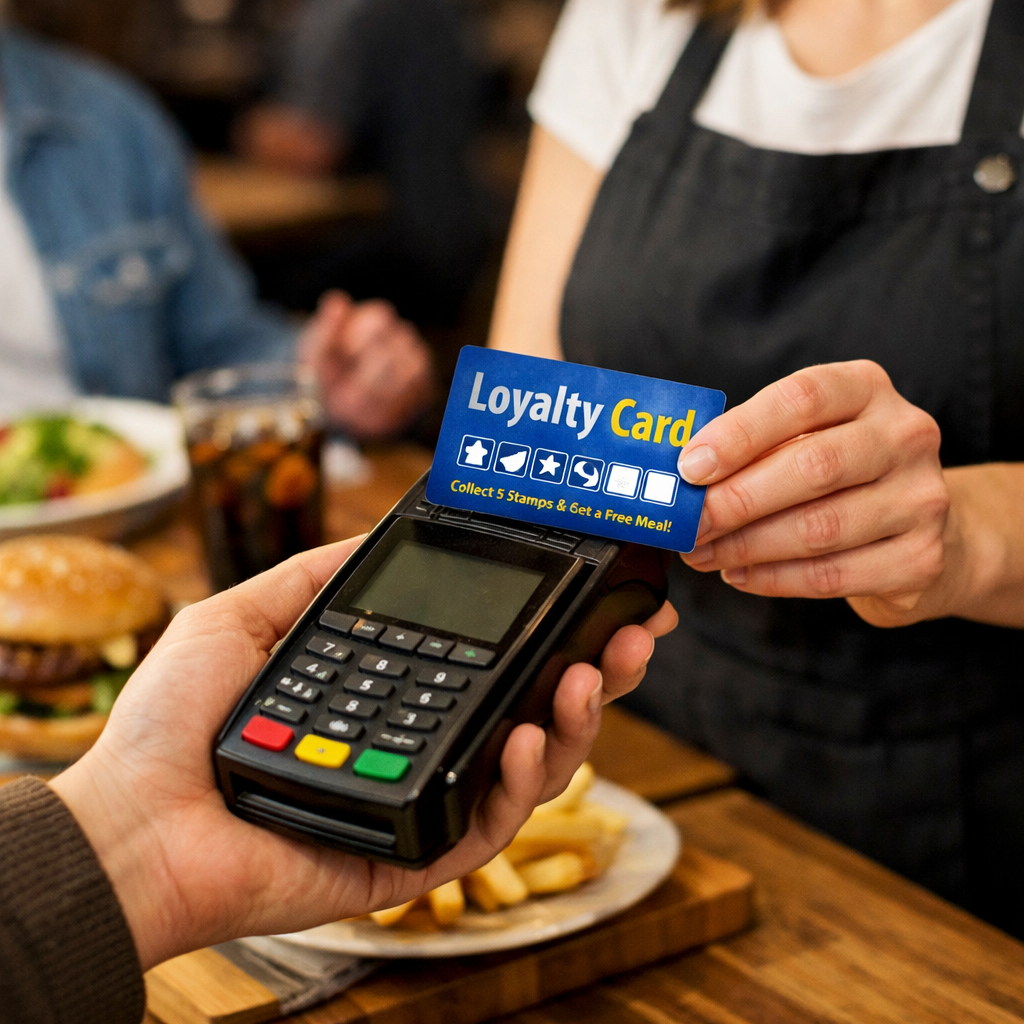
Digital punch cards (e.g., buy 9 coffees, get the 10th free)
-
Earn 1 point for every $1 spent
-
Double points during slower afternoon hours
-
Birthday coffee or pastry
-
Bonus points for trying a new seasonal drink
-
Personalized offers based on favourite menu items
These promotions work well because customers visit frequently and make relatively small purchases. Rewards that are easy to earn reinforce existing routines, while bonus point events and personalized offers can influence when customers visit and what they order without requiring large discounts.
Quick Service and Fast Casual Restaurants
Quick service and fast casual customers often make frequent, convenience-driven purchases. Whether it's grabbing lunch during the workday, picking up dinner on the way home, or ordering a quick meal with the family, these visits can become regular habits. A loyalty program helps reinforce those habits by giving customers more reasons to return while encouraging them to spend more during each visit.
Popular loyalty structures and promotions:
-
Earn points for every dollar spent
-
Double points on weekdays or slower parts of the day
-
Bonus points when purchasing combo meals
-
Birthday rewards
-
Limited-time rewards tied to new menu launches
These promotions work well because quick service customers make frequent purchasing decisions. Small rewards can encourage customers to visit one more time each month, while points tied to spending or combo meals can naturally increase average order value without feeling like an upsell.
Full Service Restaurants
Full-service restaurant guests typically visit less frequently than quick service customers, but each visit represents a higher-value opportunity. Dining decisions are often tied to meaningful moments, such as birthdays, anniversaries, date nights, business dinners, or family celebrations. Because these occasions are more intentional, loyalty programs need to focus on building a stronger connection and staying top of mind between visits.
Popular loyalty structures and promotions include:
- Points earned on every dollar spent
- Complimentary appetizers, desserts, or drinks after reaching a spending milestone
- Birthday and anniversary rewards
- Exclusive invitations to tasting events or special dinners
- Early access to seasonal menus or new offerings
- Personalized offers based on previous dining preferences or visit history
Staying connected between visits is especially important for full-service restaurants. Regular newsletters, seasonal menu updates, special event invitations, and personalized offers give customers a reason to think about your restaurant even when they aren't actively planning a meal. A loyalty program can help make this easier by providing customer data and insights that allow businesses to send more relevant communications based on guest preferences and behaviour.
|
Business type |
Typical customer behaviour |
Goal |
Effective promotions |
|
Coffee shops |
Frequent visits, lower spend |
Build daily or weekly habits |
Digital punch cards, birthday rewards, bonus points, seasonal drink promotions |
|
Quick service and fast casual |
Frequent visits, moderate spend |
Increase visit frequency and average order value |
Points per dollar spent, combo bonuses, double points days, birthday offers |
|
Full-service restaurants |
Less frequency visits, higher spend |
Stay top of mind for future special occasions |
Anniversary and birthday rewards, exclusive events, complimentary appetizers |
What Makes a Restaurant Loyalty Program Succeed or Fail?
A well-designed restaurant loyalty program can become one of the most effective tools for building long-term customer relationships. However, success depends on more than simply offering rewards. The best programs are designed around how guests actually interact with your restaurant, from how often they visit to what motivates them to come back.
Creating an effective loyalty program doesn't have to be complicated. By keeping the experience simple, offering rewards guests genuinely value, and using customer insights to improve over time, restaurants can build a program that benefits both the business and its guests.
Successful restaurant loyalty programs often share several characteristics:
-
Simple earning rules: Guests should immediately understand how they earn rewards and how close they are to their next benefit. Whether it's points for every dollar spent, a free item after a certain number of visits, or bonus points during specific promotions, the value should be clear.
-
Meaningful rewards: Rewards should feel valuable enough to motivate guests to return while still making financial sense for the restaurant. A free appetizer, dessert, coffee, or menu item can create a strong incentive without requiring large discounts.
-
Easy redemption: Guests should be able to use their rewards quickly and easily. Complicated rules, confusing redemption processes, or too many restrictions can create frustration and reduce engagement.
-
Consistent promotion: A loyalty program only works when guests know it exists and remember its benefits. Restaurants should promote their program through staff recommendations, receipts, email, SMS, social media, and in-store signage.
-
Personalization: Guests are more likely to engage when offers feel relevant to them. Tailored offers, birthday rewards, and SKU-based rewards help create experiences that feel more personal.
-
Ongoing optimization: Customer preferences change over time, so restaurants should regularly review program performance, redemption patterns, and guest behaviour. These insights can help improve rewards, promotions, and communication strategies.
On the other hand, restaurant loyalty programs often struggle when they become overly complicated or fail to deliver enough value.
Common reasons restaurant loyalty programs fail include:
-
Rewards take too long to earn
-
Guests don't understand how the program works
-
Rewards aren't relevant to their preferences
-
Redemption is confusing or inconvenient
-
Staff rarely mention or promote the program
-
Customer data isn't used to create more personalized experiences
There is no single formula for creating a successful restaurant loyalty program. The most effective programs are built around one simple goal: giving guests more reasons to choose your restaurant again. When rewards fit naturally into the dining experience, are easy to understand, and provide real value, loyalty becomes a habit rather than just a promotion.
For more insights, check out our guide on why restaurant loyalty programs fail and what works instead.
How to Get Started with a Loyalty Program
Once you've decided that a loyalty program is right for your restaurant, the next step is creating a program that fits your guests, your operations, and your business goals. The strongest programs are built with a clear understanding of what you want to achieve, whether that's increasing visit frequency, encouraging larger orders, improving guest retention, or collecting customer insights.
A typical implementation process looks like this:
-
Define your goals. Start by identifying what you want your loyalty program to accomplish. Are you trying to increase repeat visits, drive more weekday traffic, increase average order value, reward your regular guests, or better understand customer preferences? Clear goals will help guide every decision that follows.
-
Choose the right program type. Different loyalty structures encourage different customer behaviours. A coffee shop may benefit from a simple punch card that rewards frequent visits, while a full-service restaurant may focus on personalized rewards and experiences. Common options include points-based programs, digital punch cards, tiered rewards, paid memberships, and referral programs.
-
Design meaningful rewards. The best rewards are valuable from the customer's perspective while remaining sustainable for your restaurant. Consider rewards that encourage repeat visits, such as a free menu item after reaching a milestone, bonus points during slower periods, birthday offers, or exclusive perks for loyal guests.
-
Choose a loyalty platform. Once you've decided what type of program you want to create, you'll need the right technology to manage it. Many restaurants use loyalty software to automate enrollment, track purchases, manage rewards, communicate with guests, and measure performance. Look for a platform that integrates with your point-of-sale system, supports your marketing needs, and can grow with your restaurant. If you're evaluating your options, check out our guide to the best loyalty program software for Canadian restaurants.
-
Promote your program. A successful loyalty program starts with strong awareness. Promoting your program across your restaurant, website, email, SMS, and social channels helps more guests discover the benefits and gives them more reasons to join and engage.
-
Measure and improve. After launch, track key metrics such as program enrollment, active members, visit frequency, average order value, redemption rates, and customer lifetime value. Use these insights to refine your rewards and keep customers engaged over time.
These six steps provide a strong foundation, but every restaurant is different. Your goals, customers, and industry will all influence how your loyalty program is designed and managed over time.
If you're ready to launch your own program, read our step-by-step guide on how to start a restaurant loyalty program for practical tips, implementation advice, and best practices to help you get started.
Conclusion: Building Customer Loyalty Through Rewards
Loyalty programs have become a fundamental part of how businesses build lasting relationships with customers. By rewarding repeat purchases, offering personalized experiences, and creating more reasons for customers to return, loyalty programs can help businesses improve retention and grow customer lifetime value.
The most effective programs are about understanding customers and creating experiences that encourage long-term engagement. Whether it's a simple punch card, a points-based system, or a fully personalized rewards program, the right approach depends on the restaurant, its customers, and its goals.
For restaurants looking to launch a digital loyalty program, platforms like DataCandy provide the tools needed to create, manage, and optimize loyalty experiences across different restaurant types. From points and rewards to customer insights and personalized campaigns, the right technology can help restaurants turn one-time guests into loyal advocates.
Try our Loyalty ROI Calculator to estimate the increase in revenue based on your own metrics.
Frequently Asked Questions
What is the purpose of a restaurant loyalty program?
The purpose of a restaurant loyalty program is to encourage guests to return by rewarding repeat visits, purchases, and engagement. For restaurants, loyalty programs help increase visit frequency, improve customer retention, grow customer lifetime value, and build stronger relationships with guests over time.
Is a punch card or points-based loyalty program better for restaurants?
Both punch card and points-based loyalty programs can be effective for restaurants, but the right choice depends on your goals and customer behaviour. Punch card programs are simple and easy for guests to understand, making them a good fit for businesses with frequent, repeat purchases, such as coffee shops or cafés. Points-based programs offer more flexibility by allowing restaurants to reward different behaviours, such as higher spending, trying new menu items, visiting during slower periods, or engaging with promotions. At the end of the day, the best program is the one that fits how your guests already interact with your restaurant and gives them a clear reason to return.
What is the difference between a loyalty program and a rewards program?
A loyalty program is designed to encourage long-term customer relationships by rewarding repeat business, while a rewards program is a broader term for programs that provide incentives for specific actions. In many cases, the terms are used interchangeably because most modern loyalty programs include rewards as a core feature.
Do restaurant loyalty programs actually work?
Yes, restaurant loyalty programs can be highly effective when they are simple, valuable, and designed around guest behaviour. Successful programs encourage customers to visit more often, increase spending, and provide restaurants with insights that help create more personalized experiences.
How much does a restaurant loyalty program cost?
The cost of a restaurant loyalty program depends on factors such as the type of program, features included, number of locations, size of the customer base, and the platform used to manage it. Restaurants should consider both the cost of the loyalty software and the cost of providing rewards when evaluating their investment.
Pricing can vary depending on whether you are using a simple digital punch card, a points-based program, or a more advanced platform with features like customer segmentation, automated campaigns, and personalized offers.
For a breakdown of DataCandy's loyalty program pricing, visit our pricing page to explore costs, features, and what’s included.
What loyalty program softwares are available in Canada?
Canadian restaurants have access to a variety of loyalty program software solutions designed to help manage guest rewards, collect customer insights, and automate marketing campaigns. These platforms can support different loyalty models, including points-based programs, digital punch cards, tiered rewards, personalized offers, and referral programs.
When choosing loyalty software, restaurants should look for features that support their goals, such as point-of-sale integrations, customer data collection, reward management, automated messaging, and performance reporting. The right platform depends on factors like restaurant type, number of locations, guest behaviour, and the type of loyalty experience you want to create.
If you're comparing different options, check out our guide to the best loyalty program software in Canada for a breakdown of available platforms, key features to consider, and how to choose the right solution for your business.
How do I start a loyalty program for my restaurant?
To start a restaurant loyalty program, businesses should first define their goals, choose a program structure, create valuable rewards, select a loyalty platform, and promote the program to customers. The best programs are easy to understand, simple to use, and designed around the way customers already interact with the business.
For a step-by-step guide, see our guide on how to start a loyalty program for your restaurant.
What data does a loyalty program collect?
A restaurant loyalty program typically collects first-party customer data such as purchase history, visit frequency, favourite menu items, reward activity, and contact information. Restaurants can use this information to better understand guest preferences, create personalized promotions, improve marketing campaigns, and deliver more relevant dining experiences.